
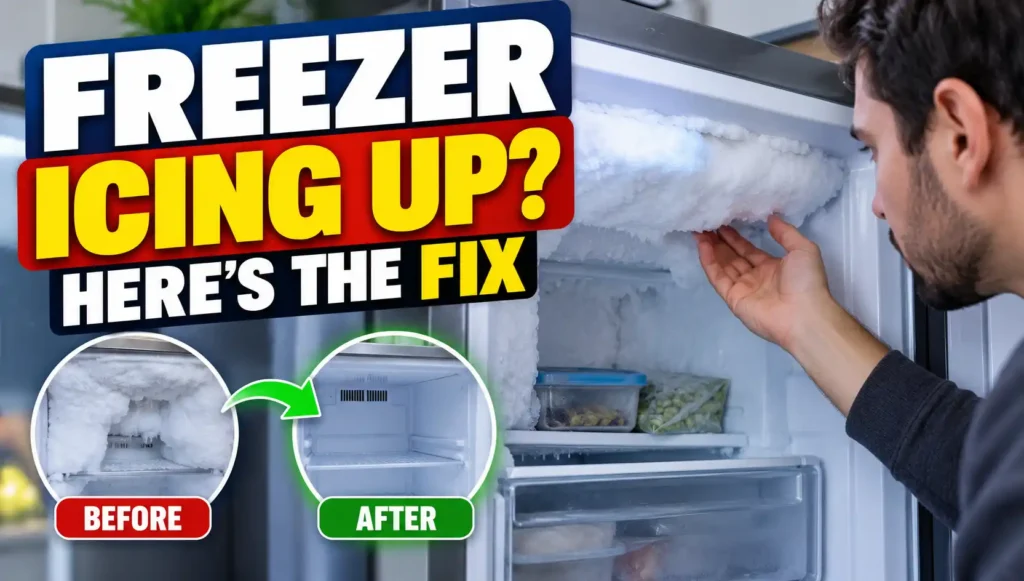
A freezer icing up almost always comes down to one of three things: a door seal letting warm air in, a defrost system that’s stopped clearing frost automatically, or a blocked drain backing moisture up into the compartment. The right freezer icing up fix depends entirely on which of the three it is, so working through them in order is faster than guessing.
This guide covers what causes the ice build-up, how to tell which cause you’re dealing with, what you can safely clear yourself, and when the fault needs a proper repair rather than a manual defrost.
Why Is My Freezer Icing Up?
A freezer relies on a defrost system to periodically melt the thin layer of frost that naturally forms on the evaporator coil during normal operation. When everything’s working, you’d never notice this happening — it cycles on briefly, melts the frost, and drains the water away before ice can build up.
Excessive ice means one of two things has gone wrong: either more moisture is getting into the freezer than the defrost cycle is designed to handle, or the defrost cycle itself has stopped working properly. Almost every case comes back to one of those two categories.
Common Causes
A Faulty or Damaged Door Seal
This is the most common cause, and the easiest to check yourself. A door seal that’s torn, hardened with age, or no longer holding its shape lets warm, humid air into the freezer continuously. That moisture hits the cold interior and freezes, and because it’s a constant leak rather than a one-off event, the ice keeps building faster than the defrost cycle can keep up.
Run your hand around the seal while the door is closed, feeling for gaps or cold air escaping. The classic test is closing the door on a piece of paper — if it slides out easily anywhere along the seal, the gasket isn’t sealing properly.
The Freezer Door Left Open or Opened Too Often
Every time the door opens, warm room air rushes in and the moisture in it lands on the cold surfaces inside. Occasional opening is completely normal and the defrost cycle handles it without issue, but a door that doesn’t close fully, or one that gets opened very frequently, introduces more moisture than the system was designed to clear.
Defrost Heater Failure
The defrost heater is what actually melts the frost off the evaporator coil during each defrost cycle. If it fails, frost keeps accumulating with nothing clearing it, and ice builds up steadily until airflow around the evaporator is restricted enough to affect cooling throughout the whole freezer.
Defrost Thermostat or Sensor Fault
The defrost thermostat (or on newer models, a defrost sensor) tells the system when the evaporator coil is cold enough to need defrosting and when it’s warmed up enough to stop. If this component fails, the defrost heater might not switch on at all, or might switch off too early to fully clear the frost each cycle — either way, ice accumulates over time even though the heater itself is working fine.
Defrost Timer Fault
Older freezers often use a mechanical timer rather than an electronic sensor to schedule defrost cycles. If the timer fails or gets stuck, the defrost cycle simply doesn’t run on schedule, and frost builds up uninterrupted between whatever cycles do manage to happen.
Blocked Defrost Drain
Assuming the defrost heater does its job and melts the frost, that water needs somewhere to go — down a drain hole at the back of the freezer compartment, through a tube, and into a drain pan underneath the appliance where it evaporates. If that drain is blocked by ice, food debris, or general buildup, the melted water has nowhere to go and simply refreezes inside the compartment instead of draining away, which looks exactly like the defrost cycle isn’t working even though it actually did its job.
Restricted Airflow Around the Evaporator
A freezer packed too tightly, or with items blocking the internal air vents, can develop uneven airflow that concentrates moisture and ice in certain spots rather than distributing normally. This is less about a fault and more about how the freezer is being used, and it’s worth ruling out before assuming a component has failed.
Humidity and Climate
Freezers in humid kitchens, or opened frequently during hot, humid weather, naturally deal with more moisture entering the compartment than the same appliance in a drier environment. This doesn’t cause a fault on its own, but it does mean a freezer that’s borderline coping with a minor seal or defrost issue is more likely to show ice build-up in humid conditions than in dry ones.
How to Tell Which Cause You’re Dealing With
The pattern of the ice build-up is a useful clue. Ice concentrated right around the door frame usually points to the seal. A thick, solid sheet across the back panel or evaporator area, especially if it’s gradually gotten worse over weeks, points more toward a defrost system fault. Water pooling at the bottom of the compartment or refreezing into a solid block on the floor of the freezer suggests a blocked drain rather than a defrost heater or seal problem. Ice that’s fairly even and light across most surfaces, without a clear concentration point, is more often related to door-opening frequency or general humidity than to a specific fault.
The Freezer Icing Up Fix: What to Try First
Step One: Manual Defrost
If there’s already a significant build-up, clear it before doing anything else — ice on the evaporator coil makes it harder to diagnose what’s actually causing the problem. Turn the freezer off, remove the food, and let it defrost fully, using towels to catch the water. This can take several hours to overnight depending on how much ice has built up. Once it’s clear, you’re working with a clean slate to observe what happens next.
Step Two: Check and Test the Door Seal
With the ice cleared, run the paper test around the whole door seal. Clean the seal itself with warm soapy water first, since a seal that’s simply dirty or has food residue on it can fail to seal properly even if it isn’t damaged. If it’s cracked, torn, or won’t hold its shape, it needs replacing rather than patching.
Step Three: Check the Drain
Locate the drain hole at the back of the freezer compartment (check your manual if you’re not sure where it is) and check for visible blockage. A turkey baster with warm water, or a straightened wire coat hanger used gently, can sometimes clear a simple blockage. If water doesn’t drain through freely, the blockage may be further down the tube where it isn’t visible or reachable.
Step Four: Monitor Over a Few Days
Once the seal checks out and the drain is clear, watch the freezer over the next few days rather than assuming it’s fixed immediately. If ice starts building up again in the same pattern despite a good seal and a clear drain, the fault is most likely in the defrost heater, thermostat, sensor, or timer — and none of those are safe or practical to test without opening up the appliance.
What’s Not Worth Attempting Yourself
Testing or replacing the defrost heater, thermostat, sensor, or timer involves accessing internal electrical components, and in some cases handling near refrigerant lines. This isn’t a place to improvise — incorrect diagnosis can mean paying for a part that wasn’t actually the problem, and working on these components without the right knowledge carries real risk of electric shock or further damage to the appliance.
When to Call a Professional
Book a proper diagnosis if:
- The door seal is intact and sealing properly, but ice keeps building up anyway
- The drain is clear but water is still pooling or refreezing inside
- Ice has built up enough to visibly restrict airflow or affect cooling elsewhere in the freezer
- The problem keeps returning within days of a manual defrost
- You can hear the defrost heater cycle but frost still isn’t clearing
A technician can test the defrost heater, thermostat, sensor and timer properly, rather than replacing parts on a guess. Fridge Repair Experts provides mobile, on-site diagnosis for a freezer icing up, with licensed technicians attending your address and genuine spare parts carried on board for common faults like a failed defrost heater, a worn door seal, or a faulty defrost thermostat. Call 0468 340 685 to book a diagnosis.
Frequently Asked Questions
Why does my freezer keep icing up even after I defrost it?
If the ice comes straight back within a few days of a manual defrost, the underlying cause hasn’t been fixed — a manual defrost only clears the existing ice, it doesn’t address a faulty seal, a failed defrost heater, or a blocked drain. Check the seal and drain first, and if both check out, the fault is most likely in the automatic defrost system itself.
Can I fix a freezer icing up problem myself?
Some causes are genuinely DIY-friendly — checking and cleaning the door seal, clearing a simple drain blockage, and doing a manual defrost are all safe to try. If those don’t resolve it, the fault is likely in the defrost heater, thermostat, sensor or timer, and those need professional diagnosis and repair.
How often should I need to defrost my freezer manually?
A freezer with a working automatic defrost system shouldn’t need manual defrosting at all under normal use. If you’re finding yourself doing it regularly, that’s a sign something in the automatic system isn’t working rather than something to just accept as routine maintenance.
Is a little bit of frost in the freezer normal?
A thin, light layer of frost that comes and goes with the defrost cycle is normal, particularly on manual-defrost freezers or older models. Thick, solid ice building up steadily over time, or ice that restricts how food fits or how the door closes, is not normal and is worth investigating.
Why is there water pooling at the bottom of my freezer instead of ice?
This usually points to a blocked drain rather than a defrost system fault — the defrost heater is doing its job and melting the frost, but the water has nowhere to drain away and is pooling or refreezing inside the compartment instead of reaching the drain pan underneath the appliance.
Will ice build-up damage my freezer if I leave it?
It can, over time. Heavy ice build-up restricts airflow around the evaporator coil, which makes the whole system work harder to maintain temperature and can eventually affect cooling throughout the freezer. It’s worth addressing rather than just chipping away the ice and leaving the underlying cause unresolved.
Book a Diagnosis
If your freezer keeps icing up and a manual defrost, a seal check and a clear drain haven’t fixed it, Fridge Repair Experts can diagnose the actual cause and repair it on the spot in most cases. Licensed technicians, genuine spare parts, and a workmanship warranty on any repair carried out.
Call 0468 340 685 to book a mobile, on-site diagnosis.